
Alan Pardew Charlton: His Full Playing and Managerial Story
Alan Pardew Charlton: From Player to Manager

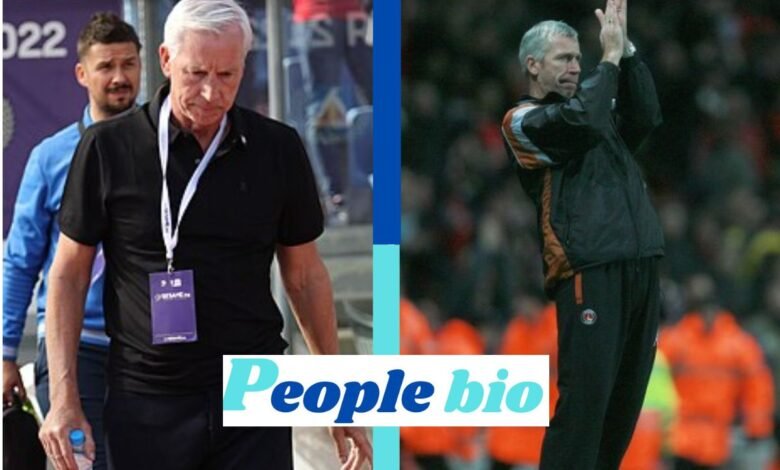
Alan Pardew has a particularly interesting connection with Charlton Athletic. Unlike many managers who arrive at a club with no previous relationship, Pardew had already experienced life at The Valley as a player before returning years later to lead the team from the dugout. His journey with Charlton therefore covers two very different periods of English football.
Pardew joined Charlton in 1991 and spent four seasons with the club as a midfielder, making more than 100 league appearances. His performances helped establish him as a reliable professional, while his relationship with experienced coach Keith Peacock also encouraged his interest in management. Years later, he returned to Charlton as manager in December 2006, inheriting a team fighting to remain in the Premier League. Although he could not prevent relegation, his Charlton story remains an important part of his long football career.
Quick Facts About Alan Pardew
| Detail | Information |
|---|---|
| Full name | Alan Scott Pardew |
| Date of birth | 18 July 1961 |
| Place of birth | Wimbledon, London, England |
| Profession | Football manager and former player |
| Playing position | Midfielder |
| Charlton playing years | 1991–1995 |
| Charlton league appearances | 104 |
| Charlton league goals | 24 |
| Charlton managerial spell | 2006–2008 |
| Previous club before Charlton | Crystal Palace |
| Managerial nationality | English |
| Known for | Premier League and Championship management |
| Major FA Cup achievement | Reached 2016 final with Crystal Palace |
Who Is Alan Pardew?
Alan Pardew is an English football manager and former professional footballer whose career has stretched across several decades. During his playing days, he was primarily a midfielder, while his later career saw him manage clubs in the Premier League, Championship and abroad.
His managerial career has included spells with Reading, West Ham United, Charlton Athletic, Southampton, Newcastle United and Crystal Palace. He also gained experience outside England later in his career.
What makes Pardew’s story particularly interesting is the transition from player to manager. His time at Charlton played a meaningful role in that development, as he experienced the club first as a footballer and later as the person responsible for team selection, tactics and results.
Early Life and Background
Alan Scott Pardew was born on 18 July 1961 in Wimbledon, London. Like many professional footballers, his route into the game was built through determination and experience rather than an immediate rise to elite-level football.
Before becoming a recognised name in English football, Pardew played for several clubs and developed his skills gradually. His career included non-league football before he eventually established himself in the professional game.
One of the defining characteristics of Pardew’s early career was his willingness to work his way upwards. He eventually joined Crystal Palace, giving him valuable experience in the professional game before his move to Charlton Athletic.
His playing career would later provide the foundation for a second career in management.
Alan Pardew’s Playing Career at Charlton
Pardew joined Charlton Athletic in 1991 after leaving Crystal Palace. His arrival gave Charlton an experienced midfielder who could contribute both defensively and in attack.
Between 1991 and 1995, he spent four seasons with the Addicks. During that period, he made 104 league appearances and scored 24 goals, numbers that underline how important he became to the team.
Pardew was not simply a player passing through the club. His performances established a strong connection with Charlton, while his time around the coaching staff helped shape his future ambitions.
Reserve-team manager Keith Peacock was particularly influential. Peacock encouraged Pardew to work towards his coaching qualifications and consider management as his playing career approached its later stages.
That advice proved valuable. Pardew eventually moved from playing into coaching, beginning a managerial career that would take him to some of English football’s biggest clubs.
His Age and Physical Features
Alan Pardew was born in 1961, making him 65 years old in 2026. During his playing career, he was generally recognised as a hardworking central midfielder rather than a player whose game depended primarily on physical dominance.
As a former professional footballer, Pardew’s appearance has naturally changed since his playing days. Modern public interest in him is more focused on his managerial career, football opinions and long-term contribution to English football than on his physical characteristics.
Career and Major Achievements
Pardew’s career has included several notable achievements. He guided West Ham United to the 2006 FA Cup final and later took Crystal Palace to the 2016 FA Cup final. He also managed Newcastle United in the Premier League and experienced promotion campaigns during his managerial career.
His work has made him one of the more recognisable English managers of his generation, particularly because of his long experience across different levels of the professional game.
Alan Pardew Charlton Managerial Return
Pardew’s return to Charlton came on 24 December 2006, more than a decade after he had left the club as a player.
The circumstances were very different from his first spell. Charlton were struggling near the bottom of the Premier League and had already gone through managerial changes involving Iain Dowie and Les Reed.
Pardew inherited a difficult situation. His immediate task was straightforward but extremely challenging: keep Charlton in the Premier League.
The appointment also carried emotional significance because Pardew already understood the club. He knew its environment, had played at The Valley and understood what it meant to represent Charlton.
However, familiarity could not make the task easy.
The Fight Against Premier League Relegation
When Pardew arrived, Charlton were sitting 19th in the Premier League. The club needed a significant improvement in results if it was to avoid relegation.
Under Pardew, there was an improvement in the team’s performances and results at different points of the campaign. Supporters had reasons to hope that the club could escape trouble.
Ultimately, however, the challenge proved too great.
Charlton were relegated from the Premier League at the end of the 2006–07 season. For Pardew, it was a particularly difficult moment because it represented the first relegation of his managerial career.
Despite the disappointment, Charlton retained faith in him. Rather than immediately looking for another manager, the club gave Pardew the opportunity to attempt to lead the team back to the top flight.
The 2007–08 Championship Season
The next season brought a completely different challenge. Charlton were no longer fighting to survive in the Premier League; instead, they were expected to compete for promotion from the Championship.
Pardew began reshaping the squad and brought in players including Luke Varney and Chris Iwelumo. The objective was to create a team capable of challenging for an immediate return to the Premier League.
The campaign, however, became increasingly inconsistent.
Charlton struggled to maintain the form required for a serious promotion challenge. Instead of securing a place near the top of the table, the club finished 11th in the Championship at the end of the 2007–08 season.
For a club that had recently been competing in the Premier League, the result was disappointing. Pressure on Pardew continued to build as expectations remained high.
Why Did Alan Pardew Leave Charlton?
Pardew’s second season at Charlton eventually became increasingly difficult. Results were not consistent enough, and frustration among supporters continued to grow.
An eight-game winless run intensified the pressure surrounding the manager. The situation reached a major low point when Charlton suffered a 5–2 home defeat against Sheffield United.
The result led to significant supporter backlash. Soon afterwards, Pardew and Charlton Athletic agreed to part company by mutual consent in November 2008.
His departure ended a managerial spell that had begun with hopes of saving the club from relegation and ultimately concluded after an unsuccessful attempt to establish Charlton as a promotion contender.
Relationship With Charlton Athletic
Pardew’s relationship with Charlton is unusual because it developed across two separate careers.
As a player, he spent four seasons at the club and became a productive midfielder. His 104 league appearances and 24 goals gave him a strong connection with Charlton supporters.
As manager, however, his experience was much more complicated. He inherited a struggling Premier League side, experienced relegation and then failed to deliver an immediate promotion push in the Championship.
Despite the difficult ending, Charlton remains an important part of his professional story. The club helped him develop as a footballer and also provided an environment where his interest in coaching grew.
Marriage and Family Life
Alan Pardew has generally kept his private family life away from the centre of public attention. Unlike some football personalities whose relationships become regular subjects of media coverage, Pardew has largely been known publicly for his football career.
Information about his family and personal relationships is relatively limited compared with the amount of material available about his professional life. This has allowed him to maintain a degree of privacy despite spending many years in the public eye.
For that reason, claims about private family matters should be treated carefully unless they come from reliable public sources.
Social Media Presence
Pardew belongs to a generation of football figures whose careers began long before social media became a major part of professional sport.
His public profile has therefore traditionally been built through television interviews, newspapers, football broadcasts and club media rather than through constant personal updates.
Although social media discussions about Pardew are common, fans should distinguish between genuine accounts, fan pages and unofficial profiles. His reputation and career remain much more closely connected to his work in football than to his online presence.
Personality and Interests
Pardew has developed a reputation as a passionate and outspoken football manager. During his managerial career, he has frequently attracted attention for his strong reactions on the touchline and his willingness to discuss football openly.
His personality has sometimes generated controversy, but it has also contributed to his recognisability. Pardew has rarely been viewed as a manager who remains completely detached from the emotion of the game.
His long career also demonstrates an interest in the tactical and organisational side of football. The transition from midfielder to coach was not accidental; it developed from experiences he had while still playing.
Net Worth and Income
There is no consistently verified public figure for Alan Pardew’s current net worth, so precise online estimates should be treated with caution.
Like other senior football managers, Pardew’s income during his career has primarily come from managerial contracts, coaching roles and other professional football activities. His earnings have varied significantly depending on the club, role and period of his career.
Because contract details and personal financial arrangements are generally private, it is more accurate to discuss his financial position cautiously rather than present an unverified net-worth figure as fact.
Public Image and Legacy
Alan Pardew’s public image has been shaped by a long and sometimes unpredictable managerial career. He has experienced promotion battles, Premier League pressure, cup-final appearances and difficult departures.
His Charlton story reflects that complexity particularly well.
The first chapter was positive. Pardew established himself as an important midfielder, scored 24 league goals and made more than 100 league appearances. The second chapter was far more challenging, as he returned to manage a club struggling at the bottom of the Premier League.
His inability to prevent relegation is an unavoidable part of his Charlton record. However, it is equally important to recognise the circumstances in which he arrived.
The subsequent Championship season increased expectations rather than reducing them. Charlton were expected to challenge for promotion, but inconsistent results eventually resulted in his departure.
Pardew’s wider legacy is therefore not defined by Charlton alone. His career after leaving the club continued for many years, giving him opportunities to manage at some of England’s best-known clubs.
His story also demonstrates how difficult the transition from player to manager can be. A footballer who understands the game from inside the dressing room still faces entirely different pressures when responsible for results, transfers, tactics and supporter expectations.
Alan Pardew Charlton: What His Two Spells Tell Us
Looking back, Pardew’s two periods with Charlton show two sides of professional football.
His playing spell was about development, consistency and establishing himself as a professional midfielder. His managerial spell was about pressure, expectations and trying to reverse a club’s decline.
The contrast is striking.
In the early 1990s, Pardew was contributing to Charlton’s performances on the pitch. More than a decade later, he was responsible for deciding which players would take the field and how the team would approach each match.
That progression makes his Charlton story especially significant within his career.
Conclusion
Alan Pardew’s connection with Charlton Athletic goes far beyond a conventional manager-player relationship. He first joined the club as a midfielder in 1991 and spent four seasons building a strong professional reputation, making 104 league appearances and scoring 24 goals.
His return in December 2006 was a very different experience. Charlton were struggling in the Premier League, and although Pardew helped improve the team’s fortunes, he could not prevent relegation.
The following Championship campaign failed to produce the expected promotion challenge, with Charlton finishing 11th. After an eight-game winless run and a heavy defeat to Sheffield United, Pardew eventually left the club by mutual consent in 2008.
For anyone researching Alan Pardew Charlton, the key story is therefore one of two contrasting chapters: a successful playing connection followed by a demanding managerial challenge. Together, they form an important part of Pardew’s long and eventful career in English football.
8 FAQs About Alan Pardew Charlton
1. When did Alan Pardew play for Charlton?
Alan Pardew played for Charlton Athletic from 1991 to 1995.
2. How many games did Pardew play for Charlton?
He made 104 league appearances for Charlton during his playing career.
3. How many goals did Alan Pardew score for Charlton?
Pardew scored 24 league goals during his four-season playing spell with the club.
4. When did Alan Pardew become Charlton manager?
Pardew was appointed Charlton manager on 24 December 2006.
5. Did Pardew keep Charlton in the Premier League?
No. Charlton were relegated from the Premier League at the end of the 2006–07 season.
6. Where did Charlton finish under Pardew in 2007–08?
Charlton finished 11th in the Championship during the 2007–08 season.
7. Why did Alan Pardew leave Charlton?
Pardew left after a difficult run of results, including an eight-game winless sequence and a 5–2 home defeat to Sheffield United. He and the club subsequently parted company by mutual consent in 2008.
8. What is Alan Pardew best known for?
Pardew is best known for his long career as an English football manager and former midfielder, including spells with clubs such as West Ham United, Charlton Athletic, Newcastle United and Crystal Palace.