

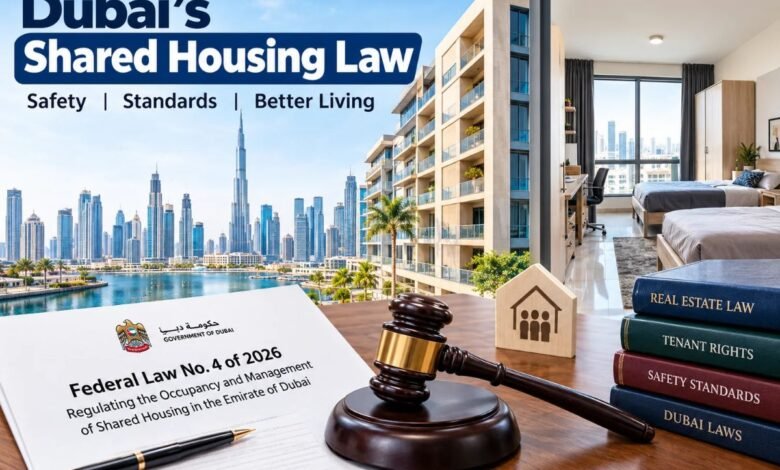
Dubai’s growing population has boosted the real estate market, and as a result, rental rates have surged. People tend to look for budget-friendly housing options in Dubai and its suburbs. Several people prefer living in Shared housing. Dubai has recently introduced well-defined and extensive shared housing laws. Federal Law No. 4 of 2026 was introduced to ensure facilities and safety standards in shared properties in Dubai. While finalizing your search for a shared housing unit in Dubai, check information from the government portal or contact professional legal consultants who can guide you on the rules for occupants, safety standards, space specifications, available facilities, and new laws.
What Dubai’s Shared Housing Law Covers
Dubai is renowned for offering premium-quality living to its residents, and thus, no compromise is acceptable to the Dubai Government on its standards. Federal Law no 4 of 2026 elaborates on quality standards, how shared housing units are leased, who can use them, and the associated regulations and provisions. The authorities like RERA and DLD will carefully scrutinize the enforcement of the New Shared Housing Law. To learn more about it, get first-hand information from knowledgeable Property lawyers in Dubai. They will guide you on the local laws, new rules, compliance, legal processes, and expectations of authorities.
UAE real estate is thriving and taking the world by storm. It is one of the most desirable investment options across the world, especially in the Asian part of the world. Dubai’s residential developments, opulent and luxurious apartments, villas, and penthouses are the talk of the town. Over time, a huge influx of people has made it a challenge to maintain the quality. Dubai has always maintained certain standards, and the New Shared housing law is part of it.
Dubai government introduced Federal Law No. 4 of 2026, regulating the Occupancy and Management of Shared Housing in the Emirate of Dubai and ensuring the security of residents in shared units. Besides, it talks about the occupancy limits that are well defined in the law. Dubai shared housing laws assist the real estate sector to remain stable and also maintain equal standards for everyone. The new law has redefined informal housing and rental practices. The law also sets mandatory permits and safety standards to create transparency, equity, and stability.
Recent UAE Legal Reforms and Their Impact
The key requirement of the new housing law is that all shared units must meet the safety standards related to health, fire, sanitation, building, electrical, and security. Under the New UAE law, only the owner or property owner and other licensed, authorized establishments can lease or operate shared housing. As a result, the other parties and tenants are not permitted to sublease any part of it. Besides, it clearly defines the role of the owner and tenant in a shared housing unit in Dubai.
Dubai Government and the Proactive Steps:
Dubai has taken up the challenge very seriously and made all the necessary arrangements to tackle the deteriorated standards. The rising demand for the shared market has drawn attention. Dubai’s new shared housing laws address all the concerns and upcoming threats. The proactive approach of Dubai has been its USP, and that helps in maintaining safety measures and safeguarding the rights of property owners and tenants.
The UAE authorities have an active role to play in ensuring top-notch property management while catering to the rising demands. The New Housing Law prohibits overcrowding of shared units in Dubai. This helps the shared unit to remain in mint and usable condition for longer.
New Housing Law has revised the previous safety standards. The review has resulted in changes in the needs safeguarding number of occupants. Dubai Municipality, DLD, and RERA are the main authorities operating in Dubai that play a significant role in monitoring safety, building, and other protocols. UAE government authorities scrutinize the set limit for the occupants, occupancy rules, the amount of space required for every resident, and the amenities available in a shared unit.
Additionally, they look for any violations of new housing laws, municipal laws, and the rest of the regulations. Furthermore, the new law has revised the occupancy standards. The concerned authorities will evaluate the current standards and ensure safety, health, and hygiene standards are met. They also ensure no overcrowding of occupants in a single shared unit.
If you are looking for a shared housing unit in Dubai, get further information from the government portal or contact professional property lawyers who can guide you on the rules for occupants, safety standards, space specifications, available facilities, and new laws.
The Need for Regular Inspection in Shared Housing:
Routine inspections are an integral part of the scrutiny. This exercise ensures that housing laws are adhered to and supervises the shared accommodation to make sure it meets the set standards. Any violation of new housing laws will be dealt with strictly by UAE authorities. They may impose penalties defined under the law. It can range from substantial fines to orders to vacate the property and more. Therefore, it is important for property owners and managers to remain vigilant for any violation.
The Role of Dubai Municipality in Housing Laws:
Dubai Municipality works towards implementing housing laws, and they also work towards addressing the associated problems. They work closely with other authorities in Dubai. They also listen to incoming complaints and issue warnings as well. They may impose penalties and give eviction orders in worst scenarios. Besides, they may impose heavy fines and warnings on property managers, tenants, and property owners to stay alert and take corrective measures. They ensure the property remains less crowded and also give clear instructions to landlords and tenants about the new housing laws.