
Jaden Clark: Biography, Career, Research and Achievements
Jaden Clark’s Journey Through AI, Robotics and Conservation

Introduction
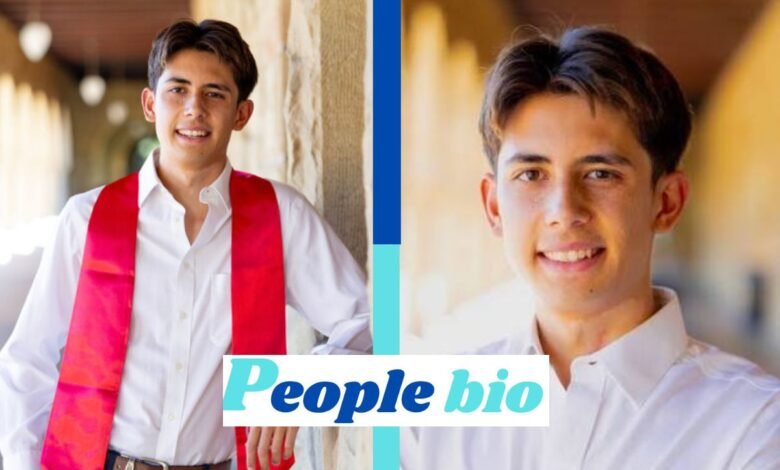
Jaden Clark is a researcher whose work brings together artificial intelligence, robotics, computer science and environmental science. Originally from Claremont, California, he is pursuing a PhD in astronautics at Stanford School of Engineering, building on his undergraduate education in computer science at Stanford University. His research focuses on creating algorithms that allow robots to explore, learn and adapt to different environments.
What makes his work particularly interesting is the way he applies advanced technology to real-world scientific challenges. His projects have included robotic systems for tracking endangered sharks in Costa Rica, drone algorithms for surveying penguins in Antarctica and robots designed to assist immunocompromised patients at Stanford Children’s Hospital. He has also travelled thousands of nautical miles studying marine animal movement and has gained recognition for his wildlife photography.
Quick Facts About Jaden Clark
| Category | Details |
|---|---|
| Full Name | Jaden Clark |
| From | Claremont, California |
| Current Field | Astronautics, AI and Robotics |
| Doctoral Study | PhD in Astronautics |
| Institution | Stanford School of Engineering |
| Bachelor’s Degree | Computer Science |
| University | Stanford University |
| Research Interests | AI, robotics, autonomous exploration and ecology |
| Wildlife Research | Sharks, penguins and large marine animals |
| Field Experience | Approximately 3,000 nautical miles across the Pacific |
| Photography | Wildlife and nature photography |
| Photography Achievement | Nature-category winner at the 2021 WikiScience Competition |
Who Is Jaden Clark?
Jaden Clark is a Stanford-based researcher working at the intersection of robotics, artificial intelligence and biological science. His academic interests centre on making robots more capable of operating in complex and unfamiliar environments.
Rather than focusing only on robots working in predictable surroundings, his research explores how machines can navigate, gather information and adapt when conditions change. This is an important area of modern robotics because real-world environments are rarely as controlled as laboratories.
His work also demonstrates how robotics can contribute to fields outside traditional engineering. By applying autonomous technology to wildlife and environmental research, he has explored new ways of observing animals and collecting scientific information.
Early Life and Background
Jaden Clark is from Claremont, California. While detailed information about his childhood and early family life is not widely documented in the information available about his professional career, his later academic path shows a strong foundation in computing and technology.
His interest in computer science eventually led him to Stanford University, where he earned a bachelor’s degree in computer science. This education gave him a strong foundation for working with algorithms, artificial intelligence and computational systems.
His academic development appears to have been shaped by a curiosity about how technology can interact with the physical world. That interest eventually expanded into robotics, autonomous exploration and applications involving wildlife and environmental research.
Education and Academic Journey
Clark studied computer science at Stanford University before continuing his academic career in astronautics at Stanford School of Engineering.
A background in computer science is particularly useful for robotics because modern autonomous machines rely heavily on software and algorithms. Robots must process information from sensors, interpret their surroundings and make decisions based on changing circumstances.
His move into astronautics adds another dimension to this technical foundation. Space exploration often requires autonomous systems because robots and spacecraft may operate far away from direct human control. The same principles can also be useful in difficult environments on Earth.
Career and Major Achievements
Jaden Clark has developed a diverse research portfolio involving artificial intelligence, robotics, healthcare and wildlife conservation.
Among his notable projects are robotic systems designed to track endangered sharks in Costa Rica and algorithms for drones surveying penguins in Antarctica. He has also developed robotic systems intended to assist immunocompromised patients at Stanford Children’s Hospital.
Another major achievement was travelling about 3,000 nautical miles across the Pacific Ocean to study the movement ecology of large marine animals. His research has been presented or published through respected robotics and biological science venues, including the International Conference on Robotics and Automation, Robotics: Science and Systems and Integrative and Comparative Biology.
Research in Artificial Intelligence and Robotics
A central part of Clark’s work involves developing algorithms that enable robots to explore and adapt to different environments.
For autonomous machines, simply moving from one location to another is often not enough. A robot needs to understand information from its surroundings and respond appropriately when it encounters unexpected conditions.
This becomes even more challenging when robots operate in natural environments. Weather, terrain, animals and other variables can change continuously. Intelligent algorithms can help machines deal with these uncertainties.
Clark’s research therefore connects theoretical computer science with practical robotic applications. His work explores how machines can become more useful scientific tools when they are capable of operating with greater independence.
Wildlife Conservation and Environmental Research
One of the most distinctive aspects of Clark’s career is his use of robotics for environmental research.
Technology can provide scientists with new ways to observe wildlife without requiring researchers to remain physically close to animals. This can be particularly valuable when studying endangered species or animals living in remote locations.
His work demonstrates how robotics can support conservation by helping researchers monitor animals, understand movement patterns and collect information from challenging environments.
Tracking Endangered Sharks in Costa Rica
Clark has built robotic systems to track endangered sharks in Costa Rica.
Marine research presents several technical challenges. Sharks can travel across large areas, move underwater and change direction quickly, making continuous observation difficult.
Robotic systems can help researchers follow animal movement and gather information that would otherwise be difficult to obtain. Such research may contribute to a better understanding of where animals travel and how they interact with their environment.
This type of work also highlights the potential relationship between artificial intelligence and conservation. Instead of using technology solely for commercial purposes, autonomous systems can become tools for studying and protecting vulnerable species.
Penguin Research in Antarctica
Another notable project involved designing algorithms for drones used to survey penguins in Antarctica.
Antarctica is one of the world’s most challenging research environments. Extreme weather, vast distances and difficult terrain can make traditional wildlife surveys demanding and expensive.
Drones can provide researchers with an efficient way to observe large areas. Intelligent algorithms can further improve their usefulness by helping autonomous aircraft collect information while navigating changing conditions.
Clark’s work in this area demonstrates how robotics can support biological research in locations where direct human observation is difficult.
A 3,000-Nautical-Mile Pacific Expedition
Clark’s research has also taken him away from the laboratory and into the Pacific Ocean.
He sailed approximately 3,000 nautical miles to study the movement ecology of large marine animals. Movement ecology examines how and why animals travel through their environments.
Fieldwork of this kind provides researchers with first-hand experience of the environments they are studying. It can also help connect computational research with real-world biological observations.
For Clark, the journey reflects the practical nature of his scientific interests. His work is not limited to developing algorithms; he has also participated directly in field research involving marine ecosystems.
Healthcare Robotics
Clark’s robotics work has extended into healthcare as well.
He developed robotic systems intended to assist immunocompromised patients at Stanford Children’s Hospital. Healthcare robotics can potentially help people in a variety of ways, from providing assistance to supporting communication and reducing unnecessary physical interaction.
Projects involving vulnerable patients also demonstrate the importance of designing robots that can function safely and appropriately around people.
This part of Clark’s work shows the broad potential of autonomous technology. The same fundamental concepts used to develop intelligent machines for environmental research can be adapted to human-centred applications.
Publications and Scientific Recognition
Clark’s research has reached audiences in both robotics and biology.
His work has been associated with major scientific venues including the International Conference on Robotics and Automation, Robotics: Science and Systems and Integrative and Comparative Biology.
The range of these publications and conferences reflects the interdisciplinary character of his research. Robotics conferences provide a platform for technical innovations, while biological publications focus on questions involving animals, ecosystems and living systems.
Bringing these areas together can help researchers develop technologies that address complex scientific problems.
Jaden Clark’s Wildlife Photography
Research is not Clark’s only connection with nature. He is also passionate about wildlife photography.
Photography allows scientists and nature enthusiasts to document animals and environments in a way that can communicate scientific subjects to a wider audience.
Clark’s photography received notable recognition in the 2021 WikiScience Competition, where his entry won in the nature category.
This achievement adds a creative dimension to his scientific profile. It suggests that his interest in wildlife extends beyond collecting research data and includes an appreciation for observing and documenting the natural world.
Her Age and Physical Features
There is no reliable public information in the supplied biographical material confirming Jaden Clark’s exact age or detailed physical characteristics.
Because of that, it would be inappropriate to provide an estimated age, height, weight or other physical measurements as established facts. For a factual biography, these details should only be included when supported by reliable public information.
His professional identity is much more strongly associated with his academic research, robotics projects, fieldwork and interest in wildlife photography.
Relationship With, Marriage and Family Life
Information about Jaden Clark’s romantic relationships and family life is not established in the available biographical material.
There are no confirmed details provided about a spouse, marriage or children. As a researcher rather than a mainstream entertainment celebrity, much of his publicly discussed profile centres on his education and scientific work.
It is therefore better to avoid speculation about his private life. Any future information about relationships or family should be based on a reliable public source or a direct statement.
Social Media Presence
Jaden Clark’s professional work has a strong connection with technology, science, wildlife and photography. However, the supplied information does not establish verified social media accounts that can confidently be attributed to him.
For that reason, specific usernames or profiles should not be presented as official without verification.
His academic publications, research projects and photography achievements provide a more reliable picture of his professional interests than unverified social media pages.
Personality and Interests
The available information suggests that Clark has broad interests extending beyond computer science.
His research demonstrates curiosity about artificial intelligence and robotics, while his fieldwork shows an interest in biology, marine animals and environmental science. His participation in wildlife photography further reinforces his connection with nature.
The combination of technical and creative interests is one of the most distinctive elements of his profile. He appears to approach technology not simply as an end in itself but as a tool for exploring questions about the natural world.
Net Worth and Income
Jaden Clark’s exact net worth and personal income are not publicly established in the information available for this biography.
As a doctoral researcher, his financial circumstances should not be assumed from his academic achievements or research projects. PhD students can receive funding through scholarships, research support, assistantships or other academic arrangements, but the specific financial details for Clark have not been provided.
It would therefore be misleading to publish a precise net-worth figure without reliable evidence.
His professional value is better understood through his research achievements, scientific publications and contributions to interdisciplinary projects rather than an estimated monetary figure.
Public Image and Legacy
Jaden Clark has developed a distinctive professional profile by connecting robotics with wildlife and environmental science.
His projects involving sharks, penguins, marine animals and healthcare demonstrate the flexibility of modern robotic technology. They also show how artificial intelligence can be used to support research in environments where conventional methods may be difficult.
His wildlife photography recognition adds another dimension to his public image. Together, his scientific and creative interests create a profile centred on exploration, technology and the natural world.
Because his academic career is still developing, it is too early to define a final legacy. However, his interdisciplinary approach offers an interesting example of how future researchers may combine engineering with environmental and biological science.
Why Jaden Clark’s Research Matters
The importance of Clark’s work goes beyond individual robotics projects.
Scientists increasingly need better ways to monitor ecosystems, understand animal movement and gather information from remote environments. Autonomous robots and drones can potentially make some of these tasks more efficient while reducing the need for constant human presence.
Artificial intelligence can add another layer of capability by allowing machines to interpret information and respond to changing circumstances.
The combination of these technologies with field biology could open new possibilities for conservation research. Clark’s projects provide an example of how engineers and scientists can work across disciplines to address complex problems.
Conclusion
Jaden Clark’s journey illustrates how computer science and robotics can be applied far beyond traditional technological applications. From Stanford classrooms and research laboratories to the Pacific Ocean, Costa Rica and Antarctica, his work connects intelligent machines with some of the most challenging questions in science and conservation.
His research involving endangered sharks, penguins, marine animals and healthcare demonstrates the practical possibilities of autonomous technology. At the same time, his passion for wildlife photography shows a strong personal connection with the natural world.
As his academic career continues, Clark’s interdisciplinary approach could provide valuable contributions to the future of AI, robotics and environmental research. His story is ultimately one of technology being used not only to build smarter machines, but also to better understand and protect the world around us.
8 FAQs About Jaden Clark
1. Who is Jaden Clark?
Jaden Clark is a researcher from Claremont, California, pursuing a PhD in astronautics at Stanford School of Engineering. His research focuses on AI, robotics, autonomous exploration and environmental applications.
2. What did Jaden Clark study?
He earned a bachelor’s degree in computer science from Stanford University and later pursued doctoral research in astronautics.
3. What is Jaden Clark known for?
He is known for interdisciplinary robotics research involving wildlife conservation, autonomous systems, healthcare and marine animal movement.
4. Did Jaden Clark work with endangered sharks?
Yes. He has built robotic systems designed to track endangered sharks in Costa Rica as part of his interest in wildlife research and movement ecology.
5. What did Jaden Clark do in Antarctica?
He designed algorithms for drones used to survey penguins in Antarctica, applying autonomous technology to wildlife research in a challenging environment.
6. Did Jaden Clark work in healthcare?
Yes. He developed robotic systems intended to assist immunocompromised patients at Stanford Children’s Hospital.
7. Is Jaden Clark also a photographer?
Yes. He has a passion for wildlife photography, and his entry in the 2021 WikiScience Competition won in the nature category.
8. What is Jaden Clark’s research focus?
His research focuses on algorithms and robotic systems that enable machines to explore and adapt to diverse environments, with applications ranging from robotics and healthcare to wildlife and environmental conservation.