
Martha Fiennes Biography: Career, Family, and Life Story
Martha Fiennes: Films, Famous Family, and Her Digital Art Journey

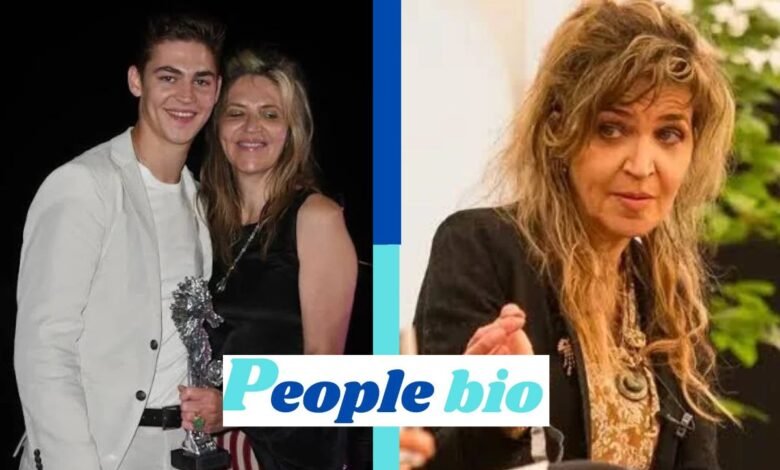
Born into the artistic Fiennes family, Martha has connections to several well-known names in British entertainment, including actors Ralph Fiennes and Joseph Fiennes, filmmaker Sophie Fiennes, and composer Magnus Fiennes. Yet her own career has followed a distinctive path. From adapting classic literature for the screen to developing digital artworks such as Yugen, she has continued to explore different ways of telling stories through images.
Her biography brings together filmmaking, family history, and a sustained interest in new forms of artistic expression.
Martha Fiennes Profile Summary
| Detail | Information |
|---|---|
| Full Name | Martha Maria Twisleton-Wykeham-Fiennes |
| Date of Birth | February 5, 1964 |
| Age | 62 years old as of October 2026 |
| Birthplace | Suffolk, England |
| Nationality | British |
| Profession | Film director, screenwriter, producer, digital artist |
| Father | Mark Fiennes |
| Mother | Jennifer Lash |
| Siblings | Ralph, Joseph, Sophie, Magnus, and Jacob Fiennes |
| Former Long-Term Partner | George Tiffin |
| Children | Three, including Hero and Mercy Fiennes Tiffin |
| Notable Films | Onegin, Chromophobia |
| Notable Digital Artwork | Yugen, Nativity |
| Known For | Filmmaking and generative digital art |
Early Life and Family Background
Martha Fiennes was born on February 5, 1964, in Suffolk, England. She grew up in a family with strong connections to photography, literature, music, acting, and film. Her parents and siblings went on to pursue different creative careers, making the Fiennes family a recognizable name in British arts and entertainment.
Her father, Mark Fiennes, worked as a photographer, while her mother, Jennifer Lash, was a novelist and writer. Martha’s siblings include actors Ralph and Joseph Fiennes, documentary filmmaker Sophie Fiennes, composer Magnus Fiennes, and conservationist Jacob Fiennes.
Growing up in this family placed Martha within a broad artistic environment, although her professional achievements developed through her own work as a filmmaker and digital artist. Her career demonstrates an interest in combining visual storytelling with experimentation rather than concentrating on one creative medium.
She eventually became known for films that drew on literary sources and contemporary social themes. Later, she extended her interests into technology-driven art, exploring how moving images could be created and experienced in new ways.
Martha Fiennes’ Parents: Mark Fiennes and Jennifer Lash
Martha’s parents had different creative interests, but both made important contributions to the family’s artistic background. Her father worked with photography and illustration, while her mother established herself as a novelist and painter.
Her Father, Mark Fiennes
Mark Fiennes was an English photographer and illustrator known for his architectural photography and work documenting historic buildings and interiors. Born in 1933, he initially pursued farming before developing his photography career.
His work appeared in publications and books, including projects focused on architecture, country houses, and historic locations. His photographs reflected an interest in buildings, landscapes, and the details that make places distinctive.
Mark married Jennifer Lash in 1962, and together they raised a large family. His creative career developed alongside the responsibilities of family life, with the household moving between different parts of England and Ireland over the years.
He died on December 30, 2004, at the age of 71. His professional background remains an important part of Martha’s family history because photography and visual composition are also central to her work.
Her Mother, Jennifer Lash
Jennifer Lash, also known as Jini Fiennes, was an English novelist and painter. Born in 1938, she published her first novel, The Burial, in 1961 and continued developing her literary career while raising her children.
She married Mark Fiennes in 1962. Their family included six biological children, among them Martha, Ralph, Joseph, Sophie, Magnus, and Jacob.
Jennifer’s interests extended beyond writing to painting and other forms of artistic expression. Her children grew up in an environment where creative work and artistic discussion formed part of family life.
Jennifer died on December 28, 1993, aged 55. Her death came before several of her children’s careers reached their most widely recognized stages.
Martha’s own work as a filmmaker and artist belongs to a family tradition that encompasses literature, photography, music, and performance.
Martha Fiennes’ Education and Early Career
Detailed information about Martha Fiennes’ formal education is less prominent in public biographies than her professional achievements. Her early career, however, shows that she developed experience in several areas of visual production before moving into feature films.
According to the Cannes Film Festival’s professional profile, she began by directing music videos for performers including Al Green and Boy George. She subsequently worked on high-end television commercials, receiving recognition for her work in advertising.
Music videos and commercials gave her opportunities to work with images, music, performers, editing, and visual storytelling within short formats. These experiences also provided a foundation for directing longer productions.
Her move into feature filmmaking represented a significant step in her career. Instead of communicating an idea within a short commercial or music video, she could develop characters, explore complicated relationships, and build a story across an entire film.
That transition led to Onegin, the project that first brought her major international recognition.
Martha Fiennes’ Breakthrough With Onegin
Martha Fiennes made her feature-film directorial debut with Onegin, released in 1999. The film adapts Alexander Pushkin’s verse novel Eugene Onegin, a celebrated work of Russian literature.
The story follows Eugene Onegin, a sophisticated aristocrat whose emotional distance and decisions affect his relationships with the people around him. Themes of love, pride, regret, and missed opportunities run throughout the narrative.
Ralph Fiennes played the title character, while Liv Tyler portrayed Tatyana. Their performances helped translate the novel’s emotional complexity into a period drama for modern audiences.
Martha’s direction brought together detailed period settings, restrained performances, and a strong visual atmosphere. Adapting a literary work of this kind required more than reproducing its plot; the film also needed to communicate the characters’ emotions and the social expectations surrounding them.
The project received significant recognition. Martha won the Best Director Award at the Tokyo International Film Festival and the Best Newcomer award from the London Film Critics’ Circle. The film also received a BAFTA nomination for Outstanding British Film.
For Martha, Onegin established her as a feature-film director with an interest in literary adaptation and carefully constructed visual storytelling.
Chromophobia and Her Second Feature Film
In 2005, Martha Fiennes released Chromophobia, a drama that took a different approach from the historical setting of Onegin.
Rather than focusing on a single central character, the film follows an ensemble of people whose lives intersect through social expectations, personal ambition, family relationships, and material concerns.
The cast includes Ralph Fiennes, Penélope Cruz, Kristin Scott Thomas, Damian Lewis, Rhys Ifans, and other established performers.
Martha wrote and directed the film, giving her creative responsibility for both the screenplay and its visual presentation. Its contemporary setting allowed her to examine social behavior and the tensions between outward appearances and private struggles.
Chromophobia was selected as the closing-night film at the 2005 Cannes Film Festival. The screening brought the film to an international audience and further established Martha’s position in British cinema.
Although her feature-film output has been relatively selective, these two films demonstrate her willingness to work with different subjects and storytelling structures.
Martha Fiennes’ Digital Art: Nativity
Martha Fiennes began exploring generative moving-image art in 2011 with Nativity. The project marked a new direction in her creative work, combining filmed material with computer-based systems that could influence how images developed.
In conventional filmmaking, the director and editor determine a fixed sequence of shots. Generative artwork can work differently by using programmed rules to produce changing combinations of images and visual elements.
This approach allows an artwork to continue evolving rather than repeating a single, unchanging sequence.
With Nativity, Martha began developing a form of artistic expression that brought together filmmaking, digital technology, and algorithmic processes. The project was presented on large screens and attracted interest from international exhibition venues.
Her work in this field is sometimes described as a precursor to contemporary AI-driven art. The important distinction is that these projects use technology as part of a larger artistic framework, with the filmmaker’s decisions continuing to shape the experience.
Nativity laid the groundwork for her subsequent project, Yugen, which expanded these ideas through more elaborate imagery and generative systems.
Yugen: Martha Fiennes’ Most Recognized Digital Artwork
One of Martha Fiennes’ best-known digital art projects is Yugen, created in 2018. The work features Salma Hayek Pinault and combines filmed performances, carefully constructed digital environments, and a bespoke computer system that generates an evolving visual experience.
The title refers to a Japanese aesthetic concept associated with profound beauty and a sense of the mysterious or the profound.
Rather than following the structure of a traditional feature film, Yugen uses layers of moving images and computational processes to create an experience that changes over time. Its visual world brings together human performance, symbolic imagery, and digitally generated environments.
The project premiered in Venice in September 2018. It was subsequently presented at the Serpentine Gallery in London during Frieze London and at the Los Angeles County Museum of Art in 2019.
Magnus Fiennes, Martha’s brother, contributed to the project’s music alongside other musicians. This collaboration connected the family’s musical background with Martha’s experimentation in digital art.
Yugen demonstrates how her filmmaking experience can be applied to a different format. Her understanding of composition, movement, atmosphere, and performance remains central, even though the final work does not function like a conventional movie.
The project has also contributed to discussions about the future of moving-image art and the possibilities of using AI-related technologies in creative production.
Martha Fiennes’ Awards and Professional Recognition
Martha Fiennes has received recognition for both her filmmaking and her contributions to the wider film industry.
Her most significant early awards were connected to Onegin. The film earned her the Best Director Award at the Tokyo International Film Festival in 1999 and Best Newcomer at the London Film Critics’ Circle Awards in 2000.
Its BAFTA nomination for Outstanding British Film added to the film’s recognition.
Her professional involvement has also extended beyond directing her own projects. She has served on several BAFTA juries and chaired film festival juries, including those associated with Tbilisi in 2015 and Haifa in 2016.
In 2017, she received a Woman of Excellence Award at the House of Lords.
Her later recognition has also come through the exhibition of her generative artworks. Presentations of Yugen at prominent cultural institutions introduced her experimental work to audiences beyond traditional cinema.
These achievements reflect the range of her career, from feature-film direction to judging film competitions and exploring new forms of digital art.
Martha Fiennes’ Relationship With George Tiffin
Martha Fiennes had a long-term relationship with filmmaker George Tiffin. The couple had three children together: Titan, Hero, and Mercy Fiennes Tiffin.
Their relationship lasted for approximately two decades, ending around 2011 according to biographical accounts. Although some online biographies have described them as married, later reporting has stated that they never married.
George Tiffin has worked in filmmaking, giving the couple a shared professional connection to the entertainment industry. Their children have also developed interests in creative work, particularly acting.
Martha generally keeps the details of her family life separate from her professional projects. As a result, her films and digital artworks have attracted more public attention than the private details of her relationship.
In more recent reporting, Martha has been linked romantically with Simon Finch, an art-world figure. Her relationship history has therefore continued to attract occasional interest, although her creative career remains the central part of her public identity.
Martha Fiennes’ Children: Titan, Hero, and Mercy
Martha Fiennes has three children with George Tiffin. Their different levels of public visibility reflect the family’s range of interests and careers.
Hero Fiennes Tiffin
Hero Fiennes Tiffin was born on November 6, 1997. He is a British actor and model best known for playing Hardin Scott in the After film franchise.
He also appeared as the young Tom Riddle in Harry Potter and the Half-Blood Prince (2009). In that film, he portrayed the younger version of the character later known as Lord Voldemort, played as an adult by his uncle Ralph Fiennes.
Hero’s acting career has brought further attention to the Fiennes family name. He has developed his own screen identity through romantic dramas and other film projects.
Titan Fiennes Tiffin
Titan Nathaniel Fiennes Tiffin is Martha’s eldest child, born in 1995. Compared with his younger brother Hero, he has maintained a much lower public profile.
Consequently, there is less widely reported information about his professional activities and personal life. He remains part of Martha’s immediate family, but he has not attracted the same level of entertainment-media attention as Hero.
Mercy Fiennes Tiffin
Mercy Jini Willow Fiennes Tiffin, born in 2001, is Martha’s daughter. She has also been associated with acting and creative work, although she keeps a relatively low public profile.
The three siblings form an important part of Martha’s personal story, connecting her filmmaking career with a younger generation of the family.
Martha Fiennes’ Net Worth and Sources of Income
Martha Fiennes has not released a verified personal net worth figure. Any specific estimate of her wealth should therefore be treated cautiously.
Her professional career has included directing feature films, writing screenplays, producing creative projects, directing commercials and music videos, and developing digital artworks for exhibition.
These activities can provide different sources of income, including production fees, professional commissions, and payments associated with artistic projects. However, her individual earnings, investments, and assets have not been comprehensively disclosed.
It is also important to distinguish Martha’s finances from those of her siblings. Ralph Fiennes, Joseph Fiennes, and other family members have their own careers and financial circumstances.
Martha’s professional standing is more clearly reflected in her awards, film credits, and exhibitions than in speculative financial estimates.
Martha Fiennes’ Approach to Art and Artificial Intelligence
Martha Fiennes’ career illustrates how a filmmaker can move between traditional storytelling and emerging technologies without abandoning the creative principles that connect them.
Her feature films rely on actors, scripts, cinematography, editing, and carefully planned narratives. Her digital artworks use some of the same visual skills but introduce algorithms that can influence the development of images in real time.
In interviews, Martha has discussed both the opportunities and the challenges presented by artificial intelligence. The technology can offer artists new ways to experiment, but questions surrounding human expression, originality, and copyright remain important.
Her approach is especially relevant as the entertainment industry debates the role of AI in film production. Rather than treating technology as a replacement for artists, her work explores how computational systems can become part of an artist’s creative process.
The distinction matters because an evolving digital artwork still requires a guiding concept, aesthetic decisions, and an understanding of what the audience is meant to experience.
Through projects such as Nativity and Yugen, Martha has continued to explore these questions in practical artistic terms.
Martha Fiennes’ Life Today
As of 2026, Martha Fiennes remains associated with filmmaking and experimental moving-image art. Her later work has focused on the possibilities of generative technology and the ways that audiences can experience images outside the conventional movie format.
Her work has also continued to appear in discussions about the future of film and artificial intelligence. In 2025, she discussed these subjects in an interview examining creative opportunities, human expression, and the implications of AI for filmmaking.
Although she comes from a well-known family of actors and artists, Martha’s career is distinct from those of her siblings. She has developed a body of work that includes literary adaptations, contemporary drama, and technology-driven art.
Her professional interests connect the history of cinema with current developments in digital creativity, giving her career relevance across both the film and art worlds.
Final Thoughts
Martha Fiennes has built a career that reaches beyond her family’s fame. Her films Onegin and Chromophobia established her as a director, while Nativity and Yugen demonstrated her interest in exploring new creative technologies.
Her work combines the established tools of filmmaking with a willingness to experiment with algorithms and evolving digital imagery. This combination makes her career distinctive within British cinema and contemporary art.
From her early work in music videos and commercials to her later digital installations, Martha Fiennes has continued to explore how moving images can communicate ideas and emotions in different ways.
FAQs About Martha Fiennes
1. How old is Martha Fiennes?
Martha Fiennes was born on February 5, 1964. She is 62 years old as of October 2026.
2. What is Martha Fiennes famous for?
She is best known for directing Onegin (1999) and Chromophobia (2005). She is also recognized for her generative digital artworks, including Nativity and Yugen.
3. Is Martha Fiennes related to Ralph Fiennes?
Yes. Martha Fiennes is Ralph Fiennes’ sister. They worked together on Onegin, in which Ralph played the title character.
4. Who are Martha Fiennes’ parents?
Her father was Mark Fiennes, a photographer and illustrator, and her mother was Jennifer Lash, a novelist and painter.
5. Who is Martha Fiennes’ partner?
Martha had a long-term relationship with filmmaker George Tiffin, with whom she shares three children. More recent reporting has linked her to Simon Finch.
6. How many children does Martha Fiennes have?
She has three children: Titan Fiennes Tiffin, Hero Fiennes Tiffin, and Mercy Fiennes Tiffin.
7. What is Martha Fiennes’ net worth?
Her exact net worth has not been established through reliable public financial disclosures. She has worked in film direction, screenwriting, production, and digital art.
8. What is Yugen by Martha Fiennes?
Yugen is a generative moving-image artwork released in 2018. Featuring Salma Hayek Pinault, it combines filmed performances, digital environments, and computer-driven processes to create an evolving visual experience.